
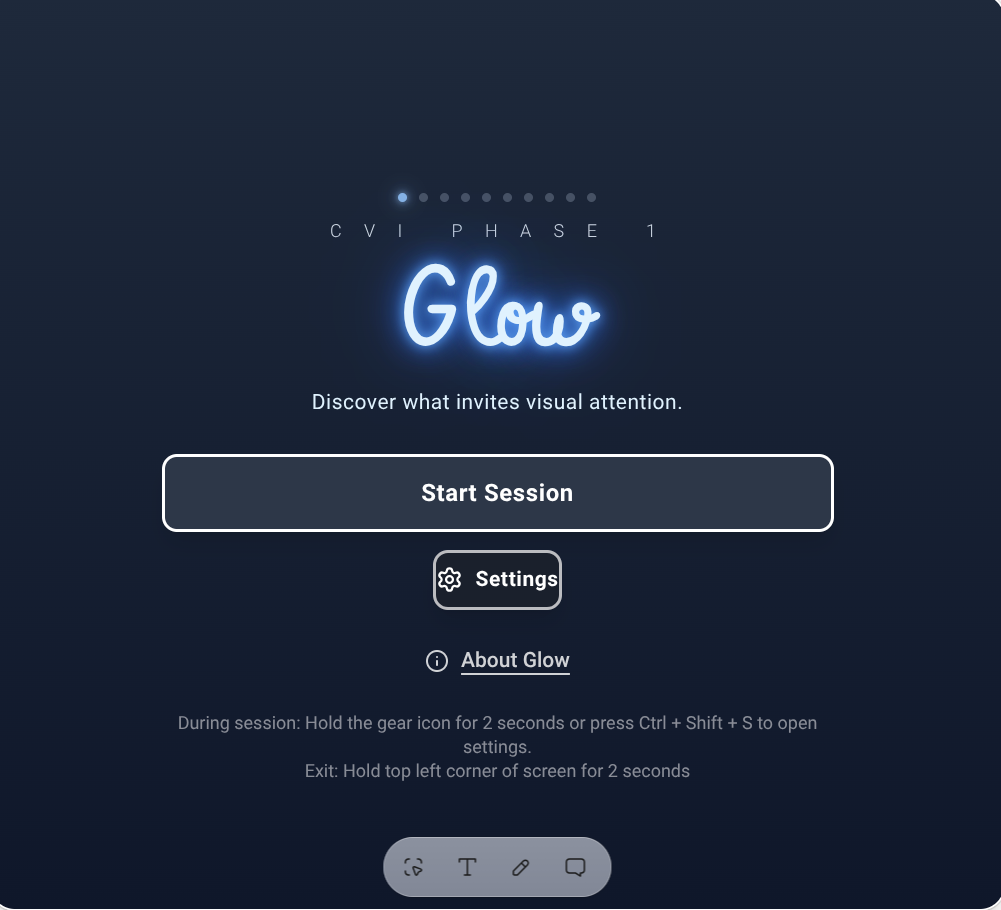
Glow
An uncluttered visual environment for attention, visual readiness, and sustained looking.
- Look
Everything here is gathered in one place so you can look around, try something, and come back to it. Most people begin with a skill — looking, finding, following, or touching — and adjust the settings from there.
Many Learn to Look apps were originally developed for learners in the early stages of using vision, including many students with Cortical Visual Impairment (CVI). Their simple, adaptable design also makes them useful for a wide range of learners who benefit from reduced visual complexity.
Four everyday visual skills. Choose the one that sounds most like the learner you have in mind.
Noticing a target and staying with it long enough to take it in.
See Look activitiesLocating something on the screen and shifting gaze toward it.
See Find activitiesWatching something move along simple, predictable pathways.
See Follow activitiesConnecting looking with reaching, touching, and making something happen.
See Touch activitiesThese four skills make up what the curriculum calls Phase 1 — a helpful shorthand for specialists, and a simple starting point for everyone else.
Color, movement, complexity, pacing, sound, and touch can all be adjusted, so the same app can suit very different learners.
An uncluttered visual environment for attention, visual readiness, and sustained looking.
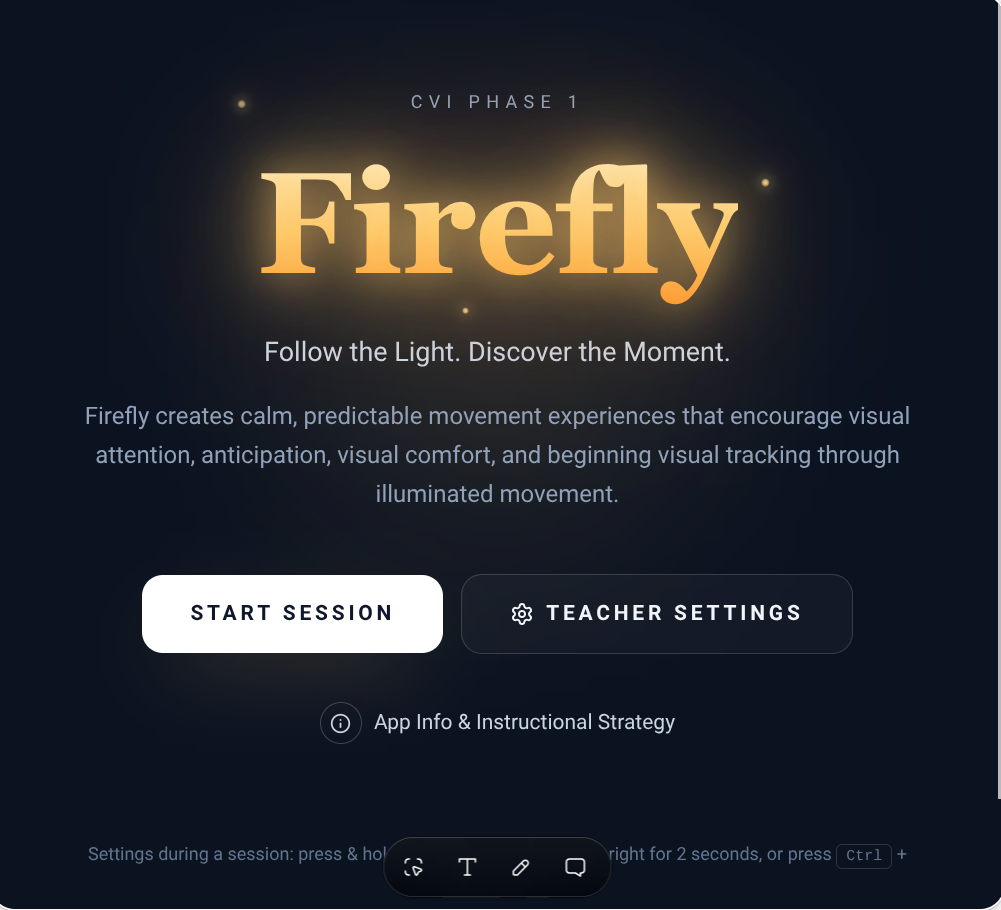
Illuminated targets with simple movement and adjustable visual complexity.
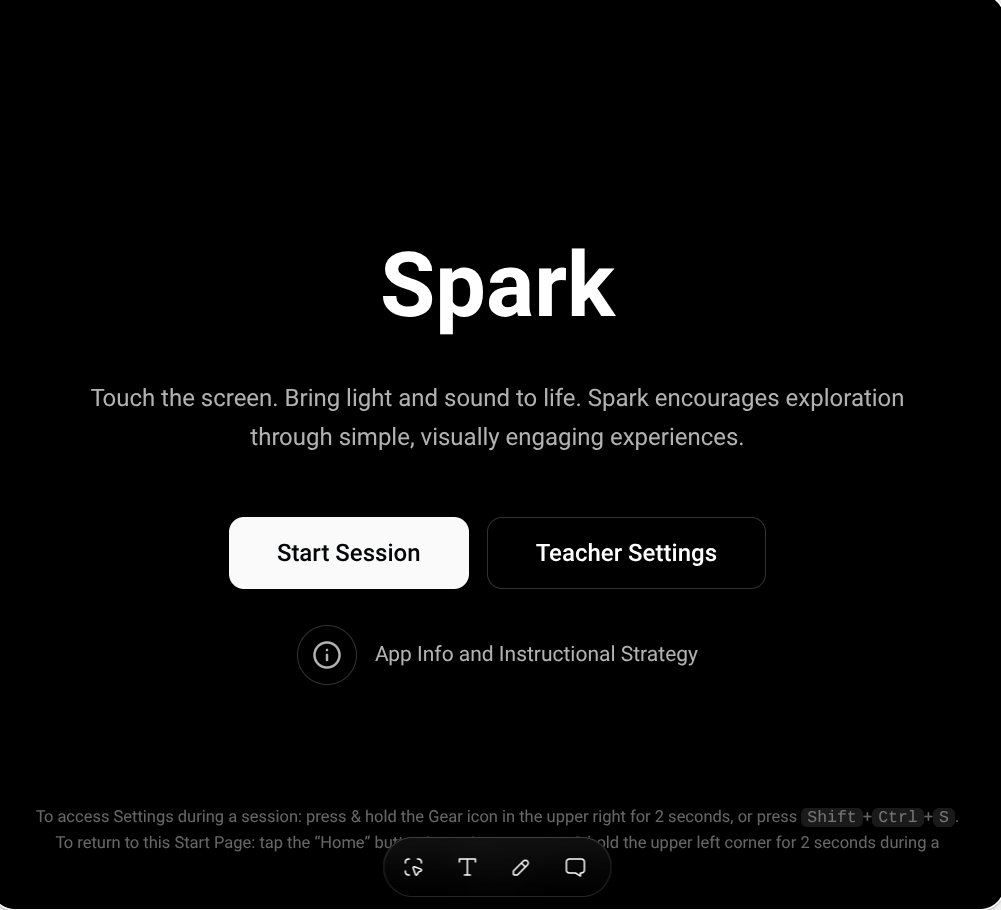
A responsive cause-and-effect environment where touch creates light, color, and movement.
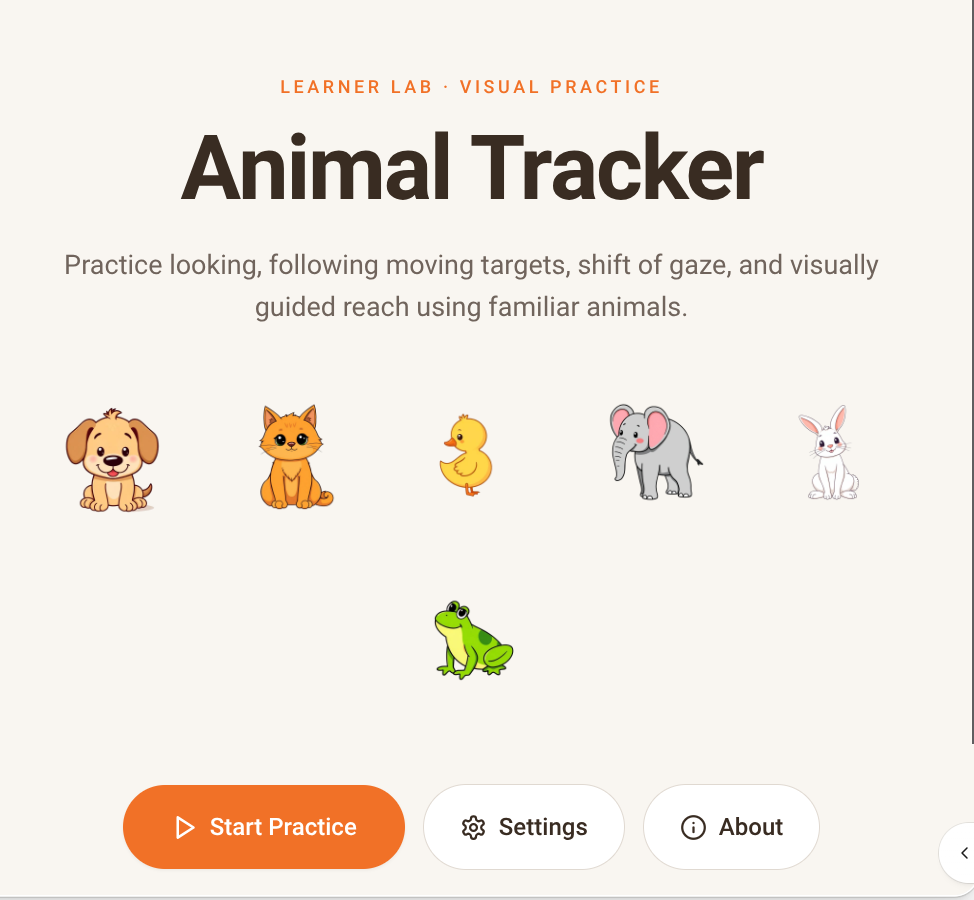
Structured tracking practice with adjustable targets, paths, pacing, and complexity.
Activities are also being gathered into small collections, so you can find something that fits the moment as easily as the goal.
Build It
Making something appear, piece by piece.
Pop It
Simple targets that respond to a look or a touch.
Glow+
Light-based activities with adjustable brightness.
Trackers
Movement along predictable pathways.
Stories
Familiar routines and repeated visual language.
Cause & Effect
Touch, watch, and try again.